
3 September 2026 · 5 min read
Skiing Gudauri for the first time
Gudauri is Georgia's main ski resort, and for a lot of people it is a genuine surprise. It has more terrain than they expect, more sun than they expect, and a great deal more space than the price suggests. If it is your first visit, here is what the mountain is actually like and how to approach it.
The character of the place
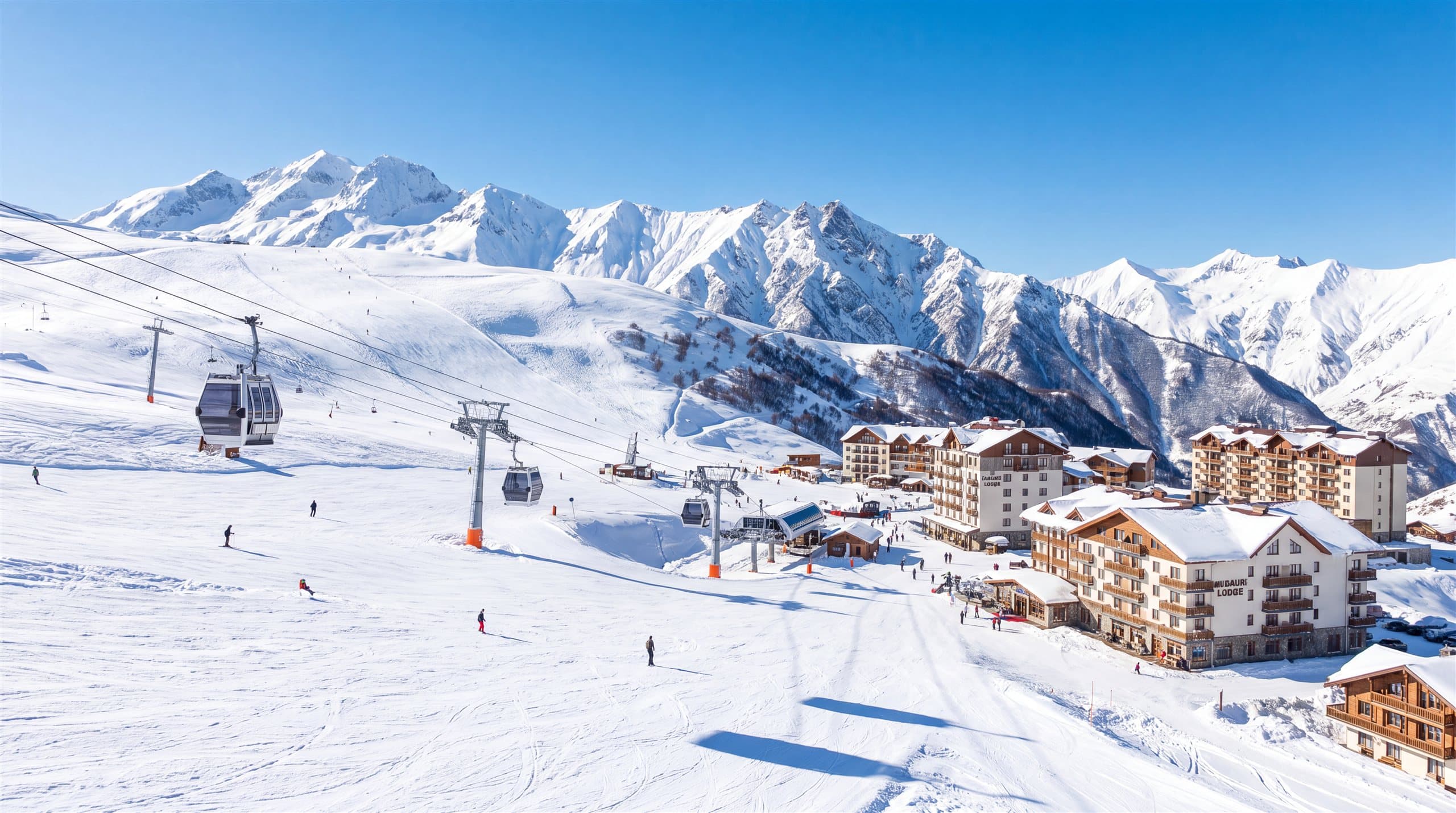
The single most important thing to understand about Gudauri is that it is largely above the treeline. The skiing happens in wide, open bowls rather than down corridors cut through forest.
This shapes everything. On a clear day the visibility is enormous and you can see your options laid out in front of you, which is liberating in a way that tree skiing is not. It also means that when cloud comes in, the definition disappears quickly and everything turns flat and white. Locals watch the weather rather than the clock, and after a few days you will too.
The other defining feature is the aspect and altitude. At 2,200 metres at the base and a good deal higher above, with a lot of sunshine, you get a combination of reliable cold and bright days that is genuinely pleasant to ski in.
The terrain
The resort is a series of connected bowls, served by a network of lifts that climb well above the village. You will read a piste-kilometre figure for Gudauri in a lot of places, and you should discount all of them: M.T.A., which runs the lifts, publishes no such figure, and the third-party numbers range from under 35 km to over 80. What is not in dispute is that a first-timer will not run out of terrain.
For beginners, there are gentle nursery areas near the base, and crucially there are long, wide, forgiving blue runs to progress onto. This is one of Gudauri's real strengths. In many resorts the step from the nursery slope to a proper run is a cliff edge. Here there is a lot of comfortable intermediate terrain to build confidence on.
For intermediates, this is the sweet spot of the resort. Long cruising runs, plenty of width, and enough variety across the bowls to spend a week without repeating yourself.
For advanced skiers, the interest is mostly off the marked pistes. The open bowls mean the off-piste is accessible and extensive, and the terrain beyond the lifts is what brings experienced skiers back. Gudauri is also well known for heli-skiing, which puts a large amount of otherwise unreachable terrain within range.
A word about going off-piste
Because the off-piste here is so easy to access, it is also easy to underestimate. Open, untracked snow directly beside a groomed run does not feel like a serious decision, but it is one.
Avalanche risk is real in this terrain. If you are going beyond the marked pistes, go with a qualified local guide who knows the current conditions, carry a transceiver, shovel and probe, and know how to use them. This is not box-ticking. It is the difference between the mountain being a pleasure and being a problem.
The guiding operators and instructors are listed in our ski school and guiding directory with their own phone, WhatsApp and website, and it is worth taking one even for a single day. Altimera is not an agent for any of them and does not book on their behalf; what we can do is point you at the right one, or pass your enquiry on if you would rather we made the introduction. The booking itself is made with the operator. A guide will also simply show you better snow than you would find on your own.
Your first few days
Day one
Do not go straight to the top. Altitude, unfamiliar terrain and a travel day in your legs are a poor combination. Spend the morning on the lower runs finding your feet, take a long lunch, and go higher in the afternoon once you have a sense of how the mountain is laid out.
Drink more water than feels necessary. At this altitude, in dry cold air, dehydration arrives quietly and feels like tiredness.
Day two
By now you will know which bowls you liked. This is the day to cover ground and get a proper sense of the scale of the place. If the weather is clear, go high early, because the light is best in the morning and the visibility above the treeline is the whole point.
Day three onwards
This is when to book a lesson or a guide if you are going to. Not day one, when you are disoriented, and not the last day, when it is too late to use what you learn. Mid-trip is when instruction actually changes your week.
Practical things worth knowing
- Sun protection is not optional. Altitude plus snow reflection plus a lot of clear days will catch you out. High factor sunscreen, lip protection and proper goggles
- Bring a spare pair of goggles or a low-light lens. Flat light above the treeline is genuinely hard to ski in with a dark lens
- Layer properly. Sunny and still can be beautiful at the base and severe at the top of the lifts on the same day
- Ski and board hire is available in the resort. The shops are listed in our ski hire directory with their own contact details, so you can reserve directly with one of them before you travel and skip the first-morning queue. Ask us and we will point you at the right shop or pass your enquiry on, but the booking is made with the shop itself
- Lessons are available in English and Russian, and instructors are used to complete beginners
Getting the timing right
The season runs roughly from December to April. Early season has the fresh excitement and fewer people, midwinter has the most reliable snow and the biggest crowds around the holidays, and March gives you a deep base with warm sun and quieter slopes.
We have written about this in more detail in when to ski Gudauri, month by month.
Where this leaves you
Gudauri rewards people who treat it as a mountain rather than a checklist. Watch the weather, go high when it is clear, take a guide if you are leaving the pistes, and give yourself the first day to arrive properly.
If you are ready to plan it, look at the winter season or why booking direct is worth it.